John Williams and Masculinity
The men John Williams writes about in Stoner and Butcher's Crossing have an idealized version of themselves, they live their lives that they are given, contemplate everything and view their path as above the world they exist in. The characters they interact with are products of the society, viewed as victims of circumstance. In Butcher's Crossing, Miller's decision to kill beyond what would they carry and reliably transport was not his to make ultimately, set right around Ulysses S. Grant's veto of the bill outlawing overhunting of buffalo, however not mentioned in the book anywhere, we see the results of the attitude this leads. Our main character view this as a man of conviction and pride, rather than a directed and coded program to rid the United States of its indigenous population.
Rath & Wright's buffalo hide yard. Dodge City, Kansas. From Wikipedia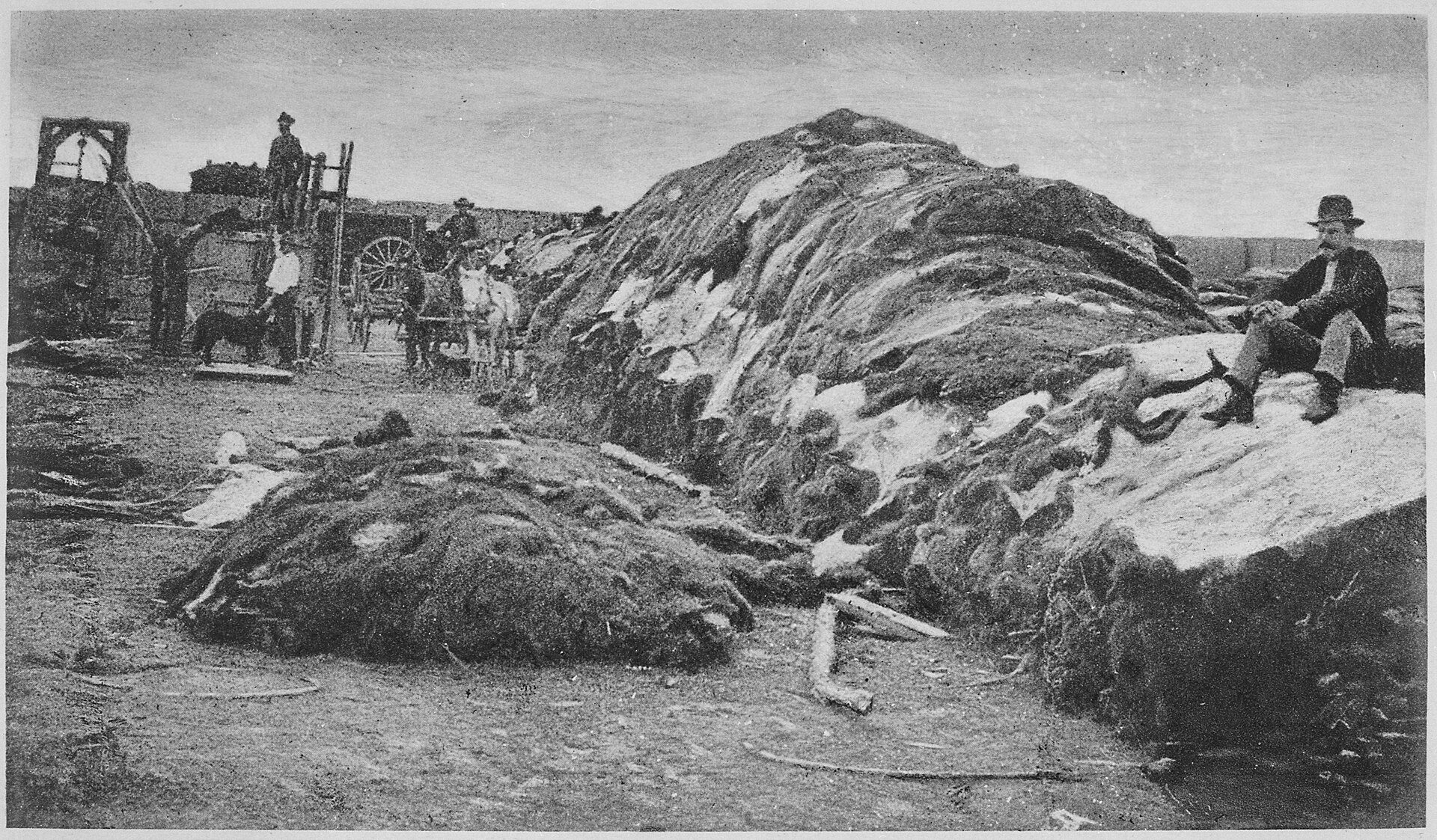
Our main character Andrews, a 23-year-old Harvard student who came to the American west in search of adventure, more or less. After this harsh voyage of murder and survival: he begins his first affair, witnesses the mental destruction of his surviving crew, and the physical destruction of the town. Then with great stoicism rides off, despite being the financial backer for the operation. He thinks about it but doesn't feel, he has thoughts about how the flies felt against his skin, or how small he feels due to failing at skinning a hide, but no strong opinion if they have killed too much buffalo, sadness fells for the first buffalo killed but believes there's no role he plays in it. The man who does have objections, Schneider, Andrews dislikes immediately. Schneider is viewed as independent-mind and a liability for Andrews' divine right to lose his humanity at this hunt.
Andrews does not think how the world would look after we have killed all the buffalo, but rather will he have changed too much to be looked at the same by the one woman who showed him attention. His thinking is small, he would most likely view this journey as a success as he had no financial goal, only to experience the western life.
Thomas Eakins, The Thinker: Portrait of Louis N. Kenton (1900)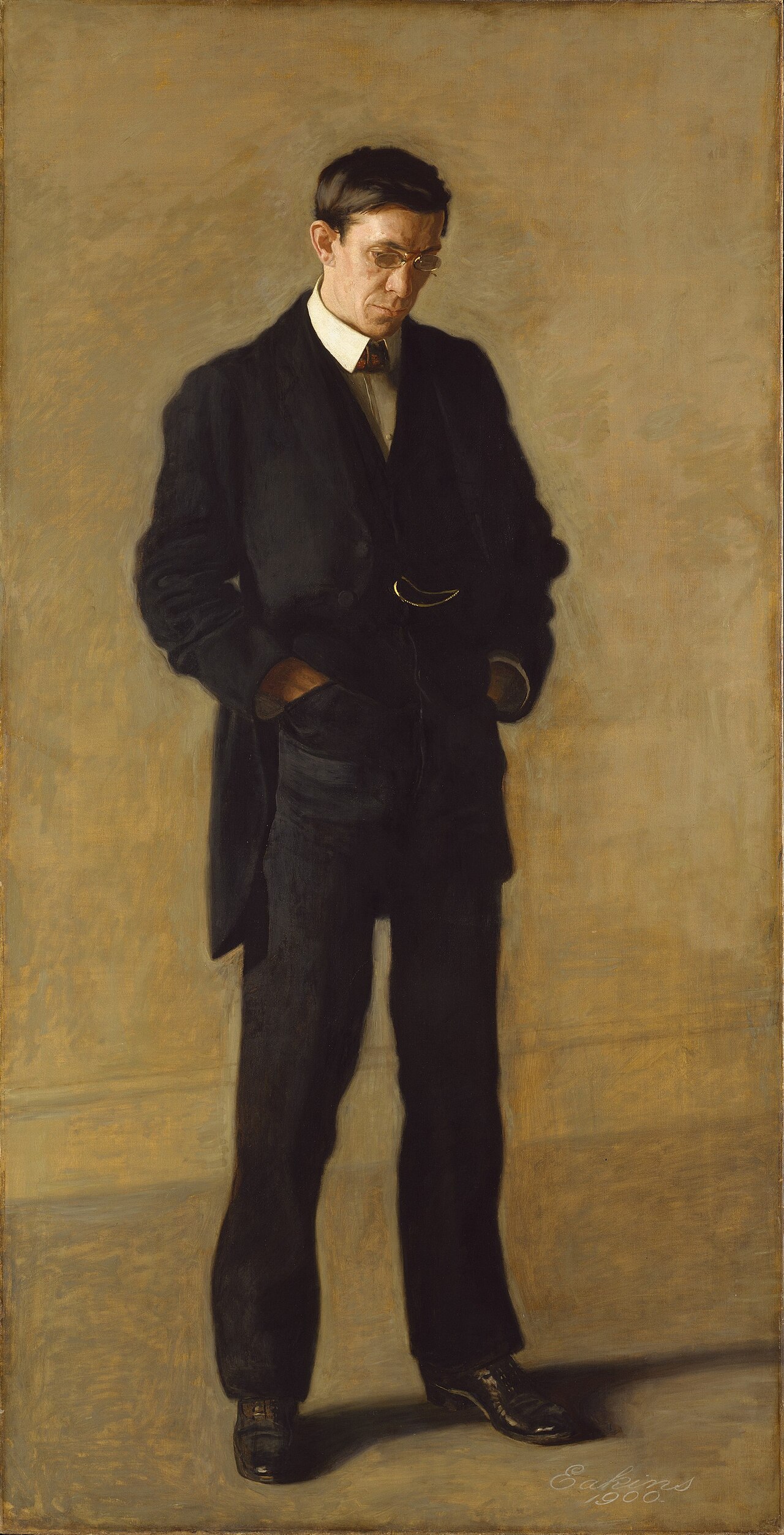
In its own introduction, and from what I've seen online, the ending is seen as bad. I didn't have this feeling, and I understand it's not universal. Stoner had moments of happiness, he was in love at various points, it was indeed at the cost of others, his relationship with his wife was resentful since the moment they met. He forces the woman he has an affair with to unceremoniously leave town after the threat of their affair gets brought up.
These are some of my favorite books, John Williams writing masculinity captures it so well on the level psychologists analysts manosphere content. He captures toxic masculinity before the phrase is even said. Men who see themselves in every character reading his work should be able to reflect with being self-aware, we may want to me Stoic and multifaceted, but all too often end up being cogs in the machine.